
After Hastings, an industry moves on
By GUILHERME MÜLLER
Horse racing may return to Vancouver in 2027, but parts of the industry that once called Hastings home are now operating elsewhere.
Veteran trainer Steve Henson spent this season at Emerald Downs in Washington after racing at Hastings Racecourse ended in December 2025. He arrived with about 10 horses. Five have since been claimed and he added two others. He now has the winter to decide how to rebuild his stable.
Henson describes his reception in Washington simply.
“It was great. I was welcomed with open arms,” he said. “Would I go back? Yes, in a heartbeat.”
Henson estimates five Hastings trainers went to Emerald Downs, another five to seven to Alberta and about three to Manitoba. One moved to Toronto.
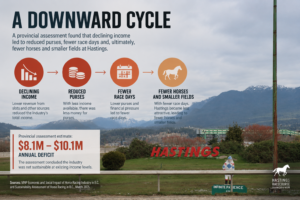
While those operations reorganize outside B.C., a new attempt to bring racing back is taking shape.
The Pacific Thoroughbred Racing Association, a nonprofit formed in March seeking to become B.C.’s Thoroughbred racetrack operator, held a lengthy meeting Sept. 10 to discuss plans for 2027. Treasurer Gary Johnson said the organization is developing a proposal to present to the city and province and hopes to have a clearer picture by the end of October.
The latest effort to revive racing comes after plans for a 10-day meet this fall fell through. The challenge now is not only bringing racing back, but rebuilding an industry that has continued to disperse since Hastings closed.
Edgar Mendoza shows what that challenge can look like for someone earlier in his training career. He spent about three years training at Hastings before the closure and is now building an operation at Woodbine in Toronto.
In a September interview with the YouTube channel dmanFuhtrute, Mendoza said the Hastings racing community had dissolved and that he had expected to remain there for the rest of his life. Now, he sees Toronto as “the place to be.”
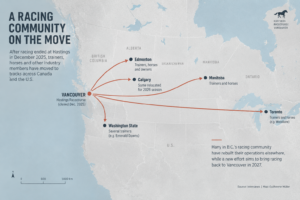
The closure came after years of financial pressure. A provincial sustainability assessment estimated an annual deficit of $8.1 million to $10.1 million and concluded the industry was not sustainable at existing income levels.
But the same assessment described a downward cycle. Declining income reduced the money available for purses, leading to fewer race days. Fewer races made Hastings less attractive as a place to race horses, contributing to fewer horses and smaller fields.
Johnson disputes parts of the province’s assessment. He called the study rushed and said industry concerns could not be incorporated before the deadline. The economic-impact report says consultants conducted 10 key-informant interviews and received 233 completed surveys from industry participants.
Johnson also argues that how racing was operated contributed to the decline.
“You need to have an operator who cares about horse racing and wants horse racing to be part of the entertainment in that particular site,” he said.
Henson, who grew up around Hastings and still lives five blocks from the racetrack, describes the impact of the closure in more personal terms.
“It’s huge. We took livelihoods away from people, is what happened,” he said.
He believes many of those who left would return, but also points to management as part of what would have to change.
“We need proper management and proper purses, proper dates,” Henson said. “Just a general change in scenery.”
Henson still considers Vancouver home and says he would return. Whether racing itself will return, however, is a question he answers differently.
“My optimistic side says yes,” he said. “My realistic side says maybe not in my time.”
Comments are closed.