
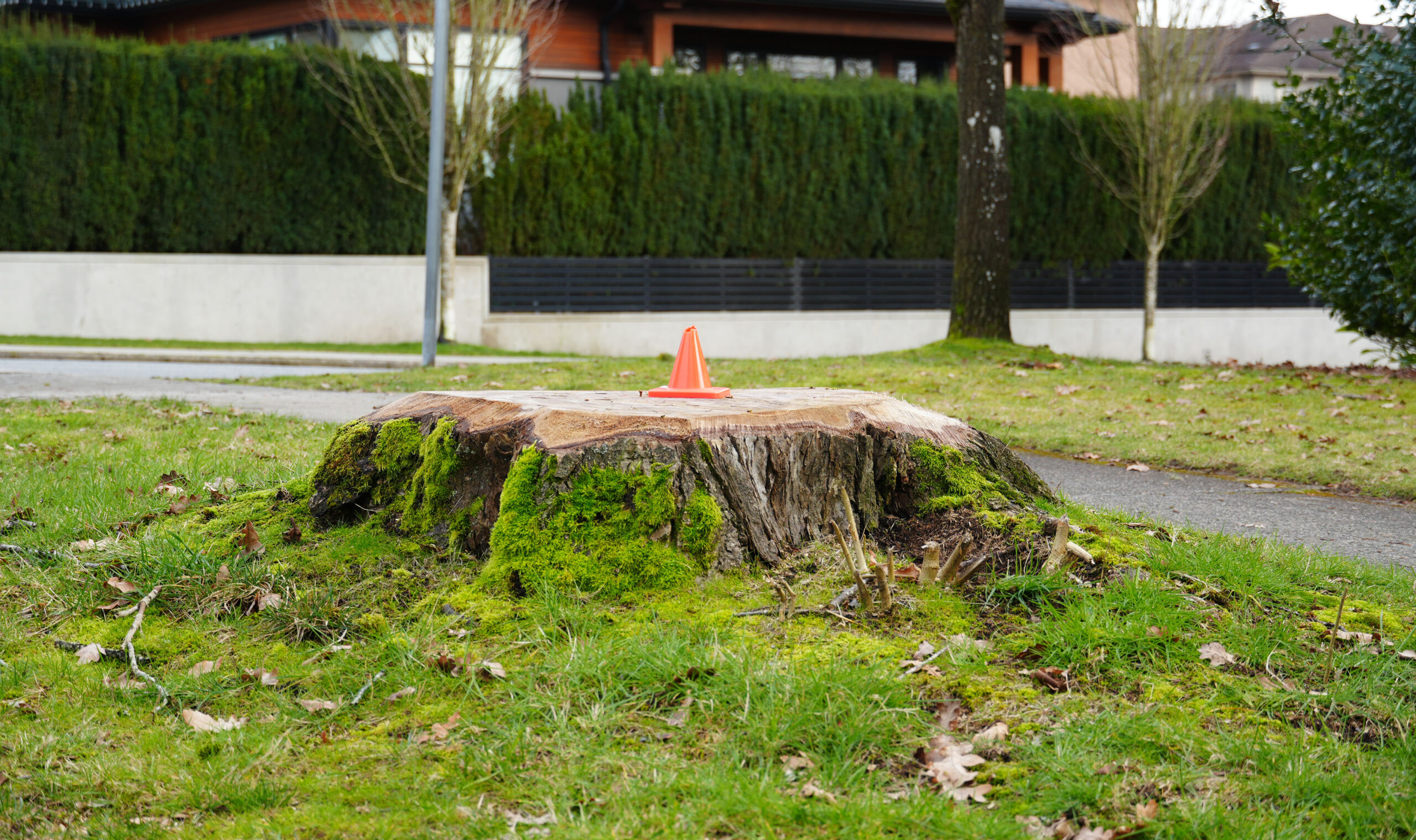
Marpole is heating up with nowhere to hide
Fewer trees and more pavement than other parts of the city could make a harsh summer for South Vancouver
By LIAM CLARKE
Five years after the 2021 heat wave, which killed more than 600 people in B.C., South Vancouver residents are grappling with its lasting impacts and questioning whether their neighbourhoods are prepared for the next extreme heat event.
And as Environment and Climate Change Canada warns that 2026 may be one of the hottest years on record, Marpole residents could be more vulnerable to the effects of urban heat than other parts of the city.
Leonard Tang, geography instructor at Langara College, said that in urban areas, where tree canopy is limited, and where concrete-heavy streets and buildings trap heat, extreme temperatures can last longer and hit harder.
Asphalt and heat go hand in hand
Five years after the 2021 heat, Marpole is still a heat sensitive hotspot.
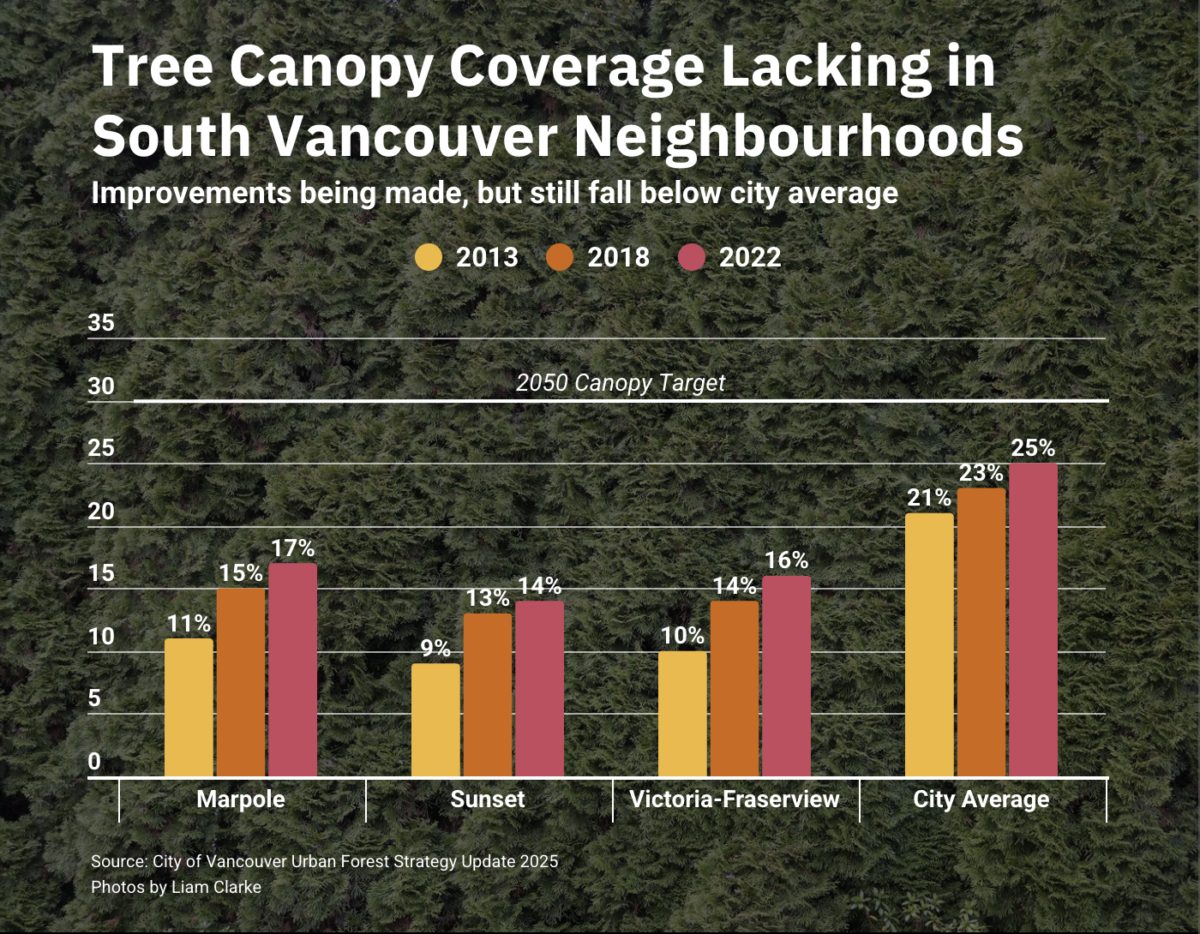
Open data stats show that tree canopy coverage in Marpole is at 17 per cent. The highest canopy coverage in Vancouver is in Shaugnessy at 41 per cent.
“Concrete and asphalt trap a lot of heat,” Tang said. “You see quite a drastic difference between the temperatures in urban areas versus rural. Not just during the daytime, but also at night.”
“You need a lot more green areas.”
Between June 25 and July 1, 2021, B.C. experienced an unprecedented heat wave that broke temperature records across Metro Vancouver. At its peak, temperatures reached over 40 C in many parts of the city. The heat wave exposed vulnerabilities in Vancouver’s buildings and social support systems, with a BC Coroners Service review finding that 619 British Columbians died in the six days of extreme heat. Most of those who died lived in homes without adequate cooling systems.
Environmental experts say this summer is on track to be one of the hottest in 43 years.
Vulnerable Vancouver
For South Vancouver residents, particularly seniors and renters who live in older apartment buildings, the BC Coroners’ review’s findings mirror local reality in neighbourhoods with limited tree canopy and buildings that are not designed for rising temperatures.
“Vulnerability to extreme heat is economically, socially and politically produced,” said Gabriela Doebeli, a graduate researcher with the Centre for Climate Justice at UBC. “It’s the result of a set of factors that layer onto each other and compound.”
The City of Vancouver said in an email to the Voice that it is working to reduce the risk of extreme heat, with a particular focus on disproportionately impacted populations through its Climate Change Adaptation Strategy.
Liv Yoon, an affiliate faculty member of the Centre for Climate Justice at UBC, which is a research and policy institute that provides recommendations and expertise on policies, said that community knowledge is essential to come up with effective heat-responses.
“Communities apply for funding to mitigate the effects of heat in ways that they know work,” Yoon said. “They have local knowledge, so we need to listen to them.”
Ryan Vernon, a librarian and technical services coordinator at Langara College, said “the heat was something we just lived with before.”
But he says that, with temperatures in the summer “slowly increasing, little by little,” he feels lucky that a few years before the 2021 heat wave he was able to afford to have air conditioning installed in his home.
“All of my family members had to come to my house because I had AC and they didn’t,” Vernon said.
(VIDEO: Leonard Tang, an environmental instructor at Langara College, talks about the role asphalt and buildings play in trapping heat)
Comments are closed.