Immersive art project returns to Langara

Former students debut a long-developed film project during their residency at the college

291

More than 16 years ago, an idea began as a small seed from Tanya Goehring, and supported it by Trevor Jacobson while they were students at Langara. Now, the Vancouver-based artist duo is returning to the college, this time as artists-in-residence to finally bring that idea to life.

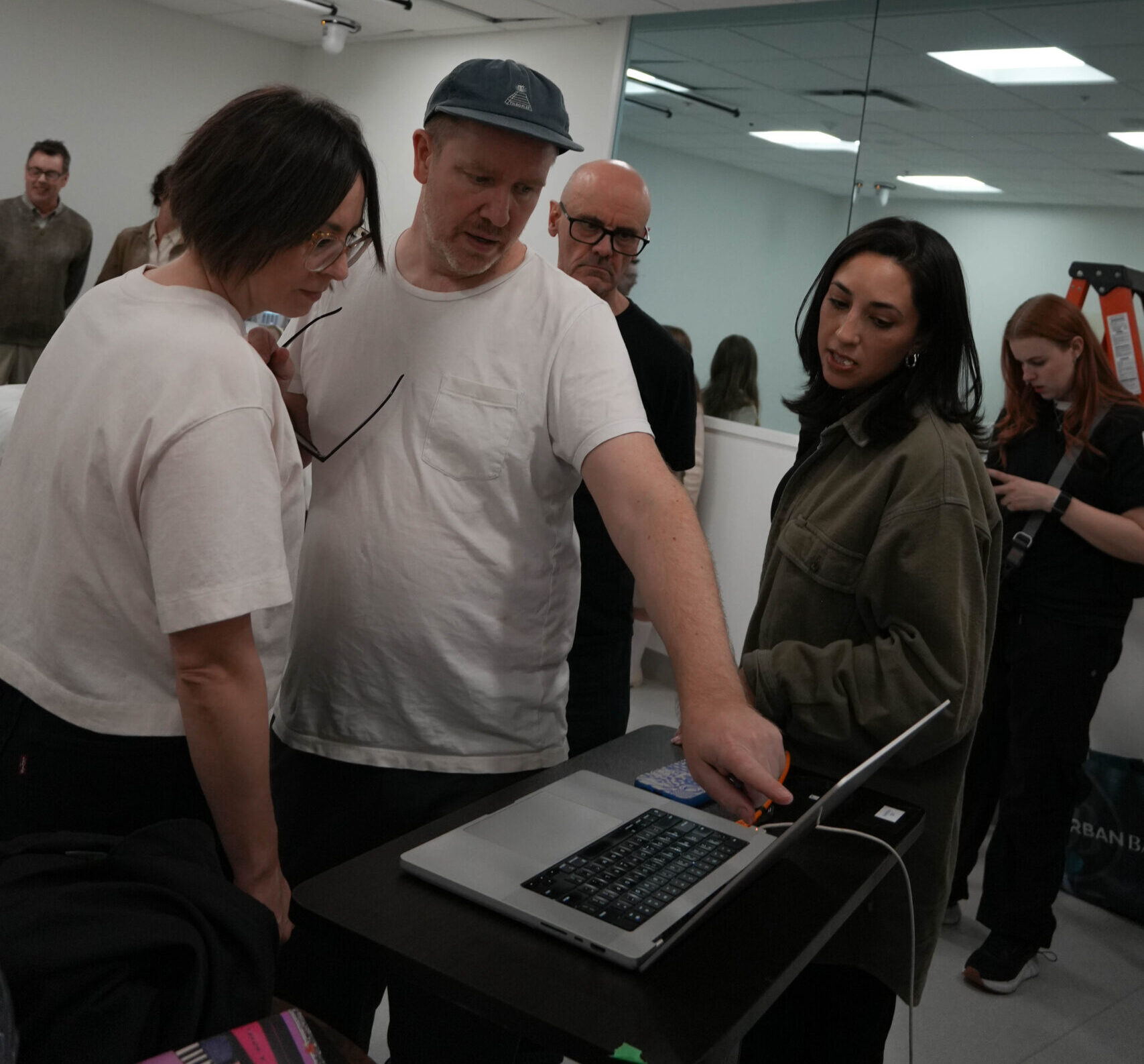
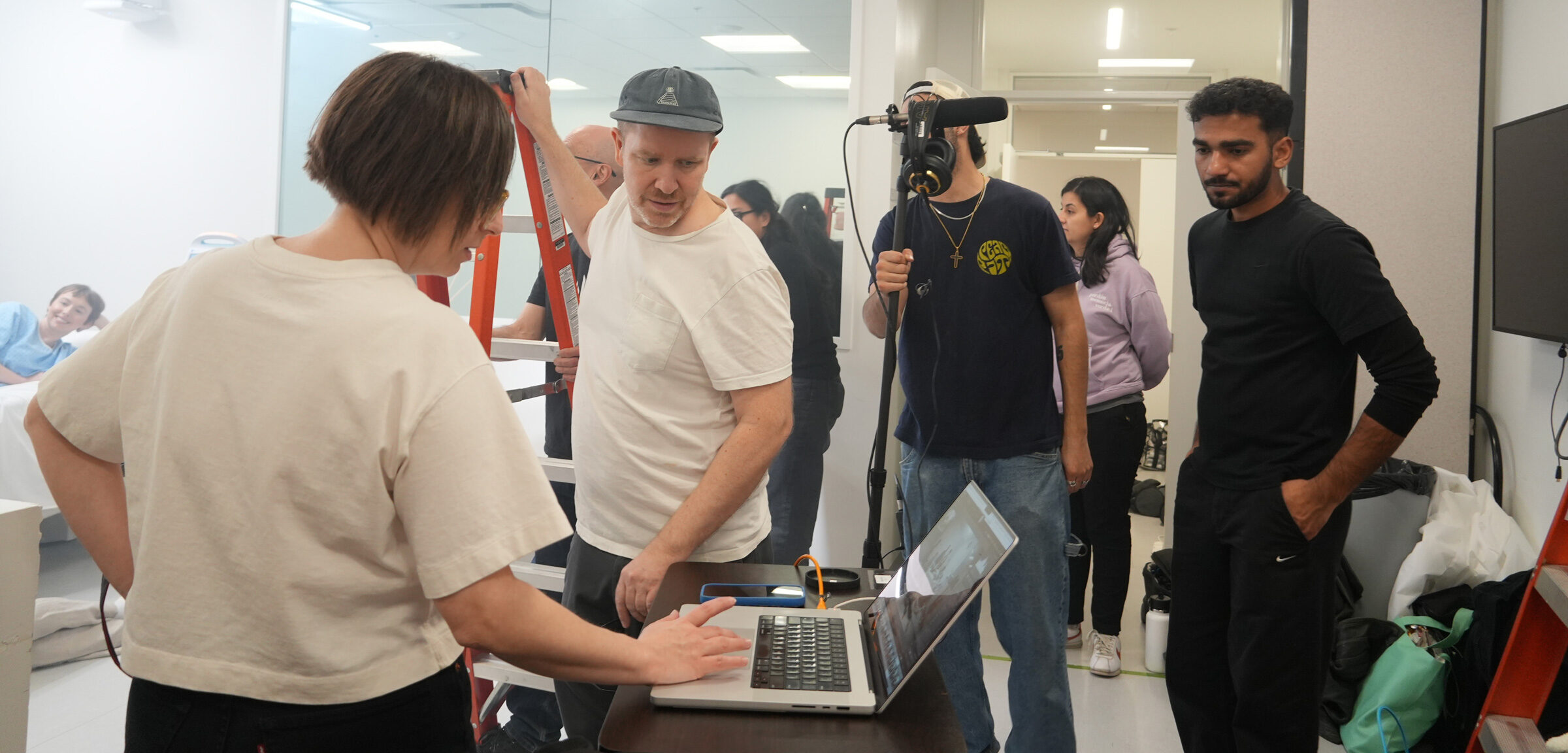
Tanya and Trevor are captured in a close, compressed frame as they discuss the image displayed on the computer screen.

Their project, How to Make a Monster, is a seven-channel immersive film installation accompanied by an original electronic score. The concept traces back to Goehring’s childhood, when she became aware of an imagined “jury,” a feeling of being watched and judged that slowly shaped her sense of self. Over time, that experience evolved into an exploration of the inner critic and the ways people construct fear, doubt and identity.

Jacobson and Goehring have worked together since 2006 under the name of the Automatic Message. Their collaborative practice spans beyond expanded and live cinema, photography, new media and electronic music production. Known for creating surreal, emotionally charged environments, the duo blends cinematic imagery with experimental sound to produce immersive, multi-sensory experiences. Their projects have been presented across Canada, the United States, Germany and Denmark.

The residency is arranged by the department of professional photography with a stipend of $15,000. The artists are developing and installing the multi-screen work within the college’s gallery space from January until April, inviting students to engage with both the production process and the final exhibition. The installation will be presented in the T Building starting April 1.

The residency allows the artists to engage directly with the students through lectures, mentorship and studio visits. Students have the opportunity to assist and observe throughout the production process, gaining practical experience in the creation of a large-scale immersive installation.


Behind the Scenes: Preparing to “Make a Monster”
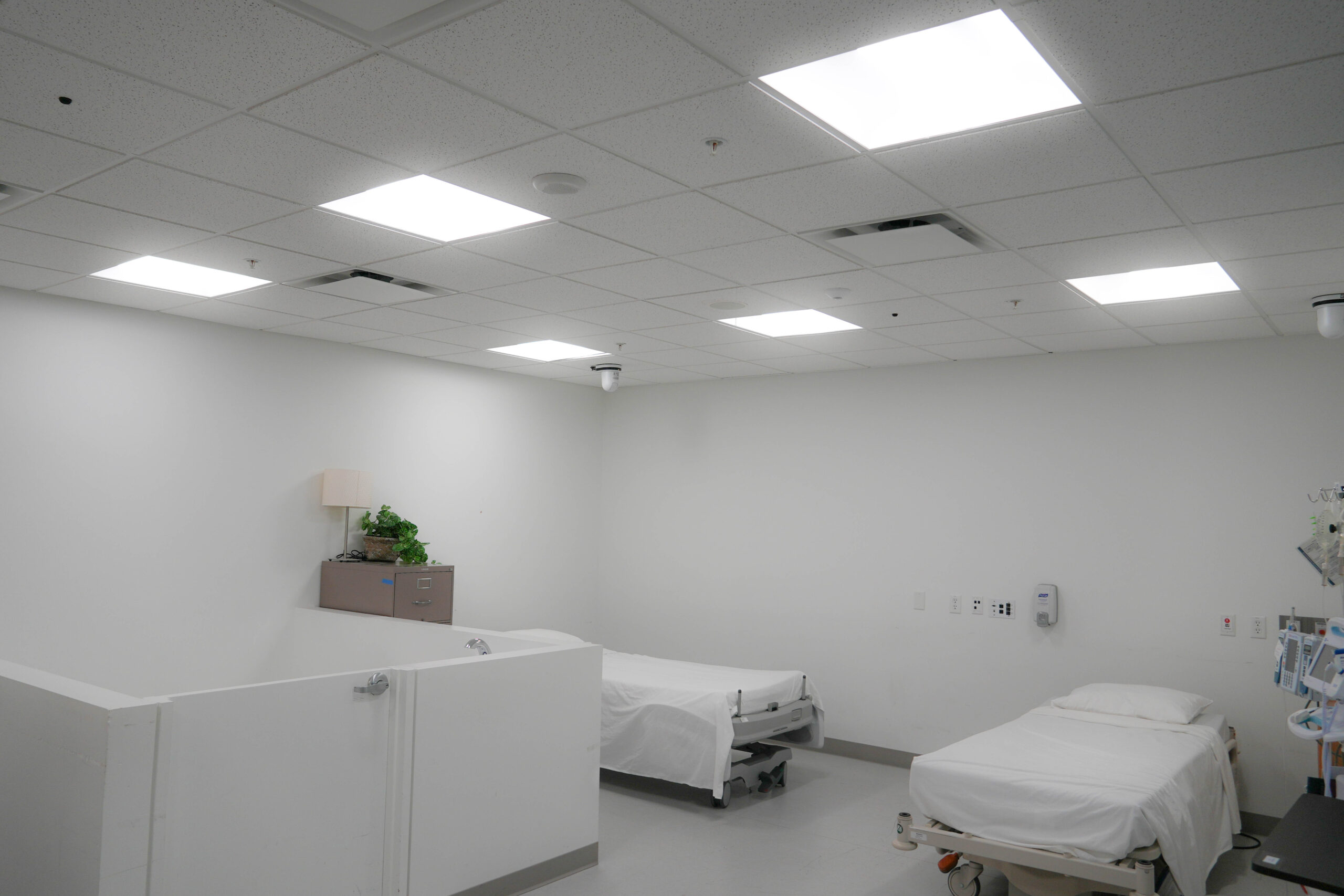
 

The hospital set sits unfinished and untouched, moments before the production begins. Without actors or crew present, the space reveals its raw structure — props partially placed, lighting unadjusted, and surfaces still waiting to be activated. I photographed the room alone, before any movement altered it, aware that this brief stillness would disappear once the collaborative process started.  This image marks the beginning of the essay, holding onto the quiet moment where a constructed environment exists only as potential, just before it is shaped by people, performance, and time.


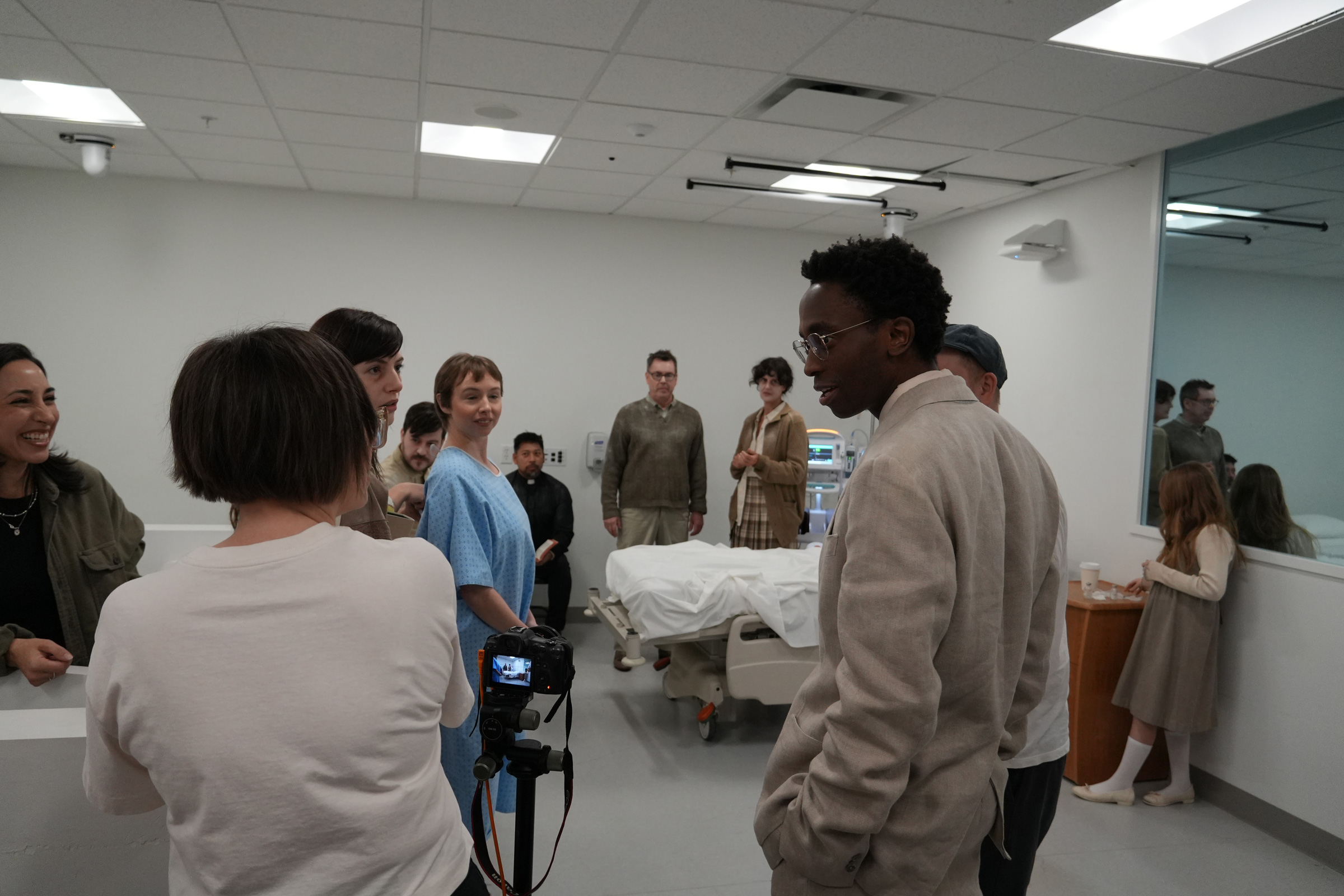
The actors gather together during a brief break, sharing laughter and conversation after stepping out of their positions on the hospital set. The mid-range framing captures a shift in energy, where tension gives way to ease and the formality of performance momentarily dissolves. Without costumes or marks to hold, the group reconnects as individuals rather than characters, revealing the social rhythm that underpins the production. This image closes the essay on a human note, emphasizing the collective effort and shared time that exists beyond the constructed scene.


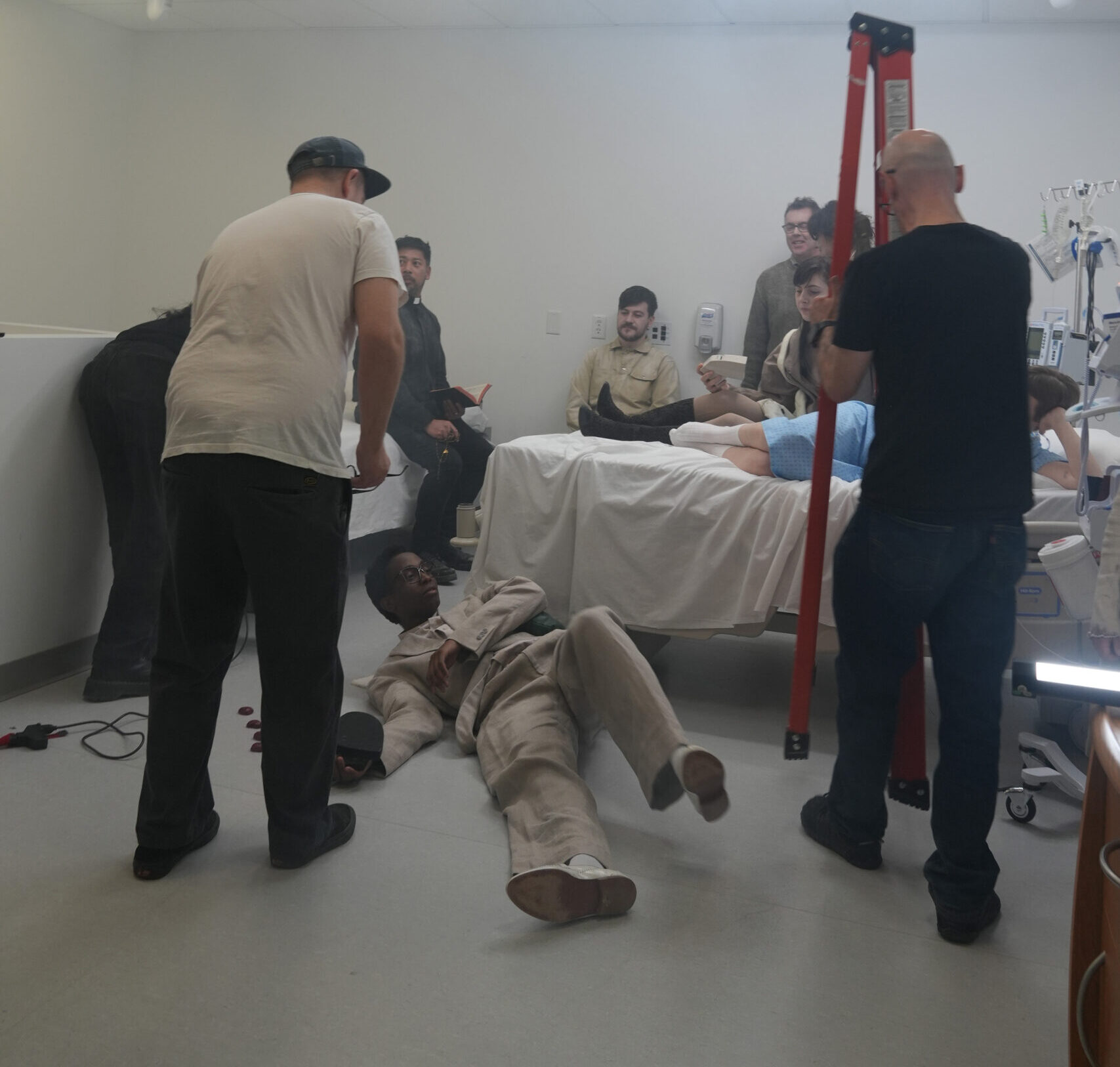
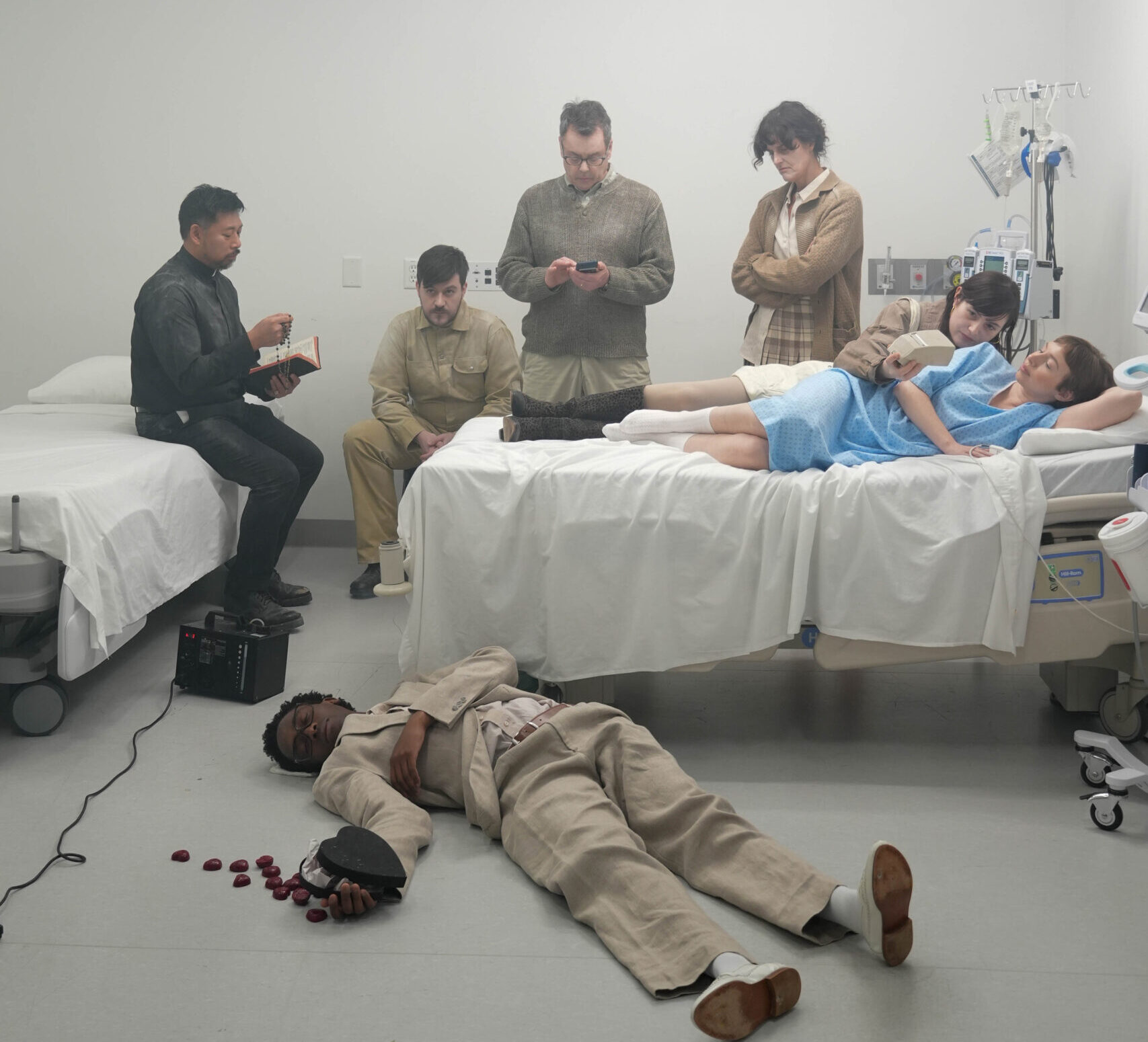
All seven actors remain in position as artificial fog continues to settle across the room, softening the fluorescent light of the hospital set. In the foreground, a crew member adjusts a ladder in preparation for the next lighting change, moving carefully so as not to disturb the actors holding their marks. The actors quietly review their lines while waiting, maintaining focus as technical adjustments unfold around them. This image highlights the layered coordination of the shoot, where performance and production happen simultaneously, and moments of waiting are shaped by ongoing movement just outside the frame.


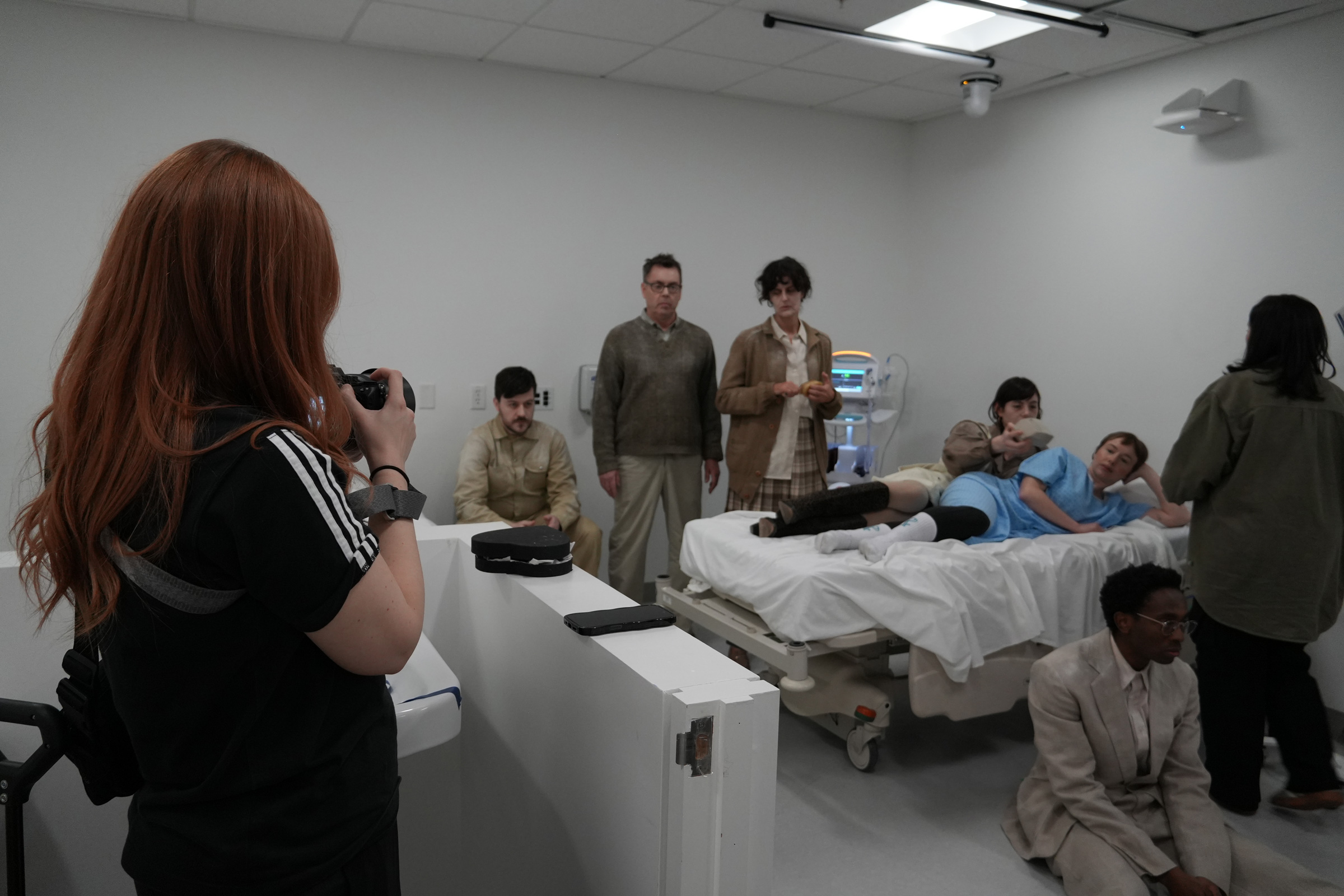
A photography student volunteering on the project photographs the hospital set while the actors remain in position, waiting for the next instruction. The image excludes the technical crew, centering attention on the actors’ quiet stillness as time stretches between takes. Their expressions and posture suggest a pause filled with anticipation rather than inactivity, shaped by repetition and restraint. This photograph emphasizes waiting as an essential part of production, where performance exists even before the camera signals readiness.


Trevor and Tanya stand with the rest of the team gathered around a laptop, reviewing the most recent image taken during the hospital scene setup at Langara College. The screen becomes a temporary meeting point, drawing everyone into a shared pause as they assess framing, lighting, and small details that need adjustment. Conversations overlap quietly — fingers point toward the monitor, suggestions are exchanged, and decisions are negotiated in real time. This moment reflects the collaborative nature of the process, where the image is not yet final but constantly evolving through collective attention and discussion before the next attempt is made.


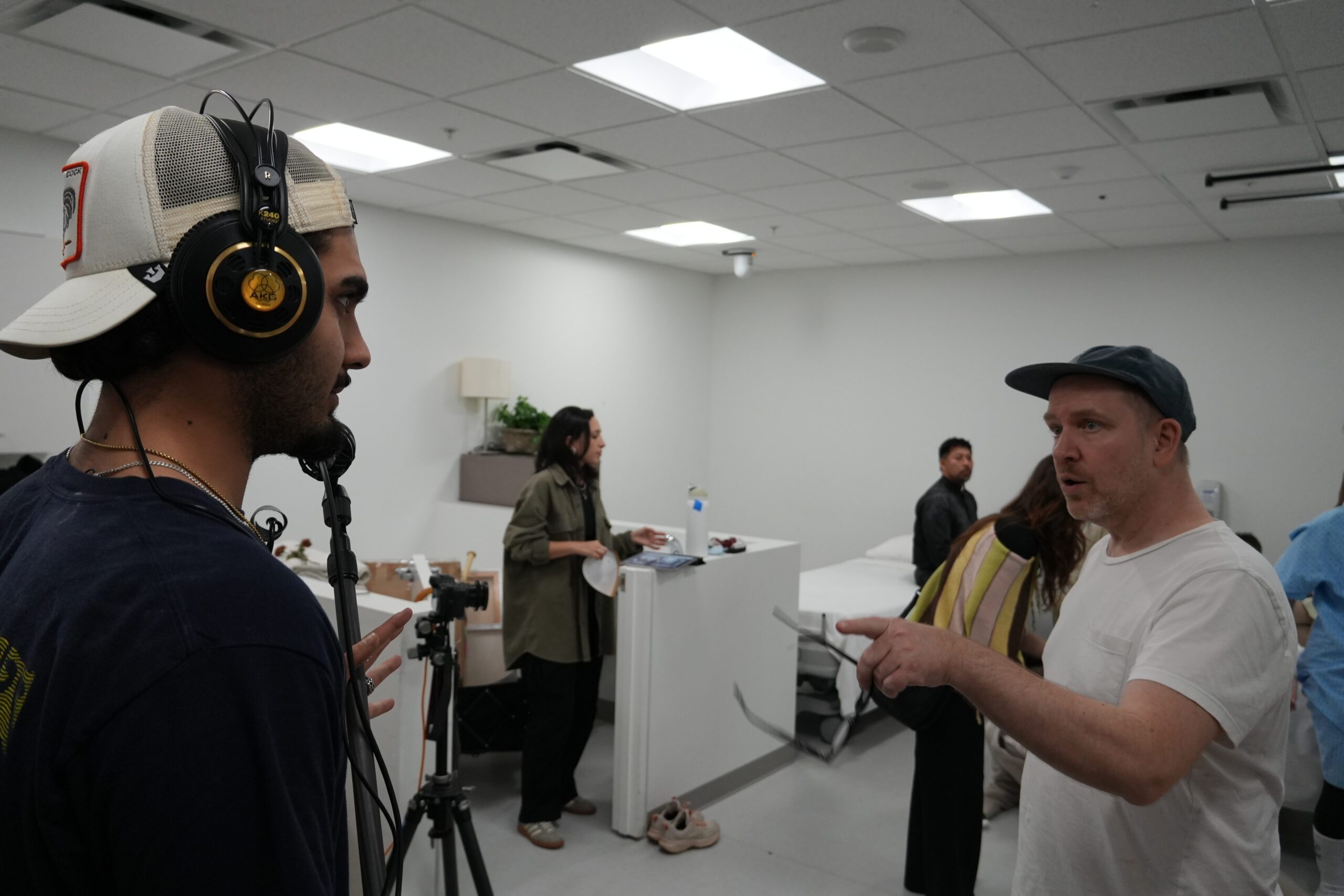
A photography student volunteering on the project speaks with Trevor while the set remains active around them, using the pause to ask questions and observe decisions being made in real time. Their body language suggests focused engagement, with attention directed toward both the conversation and the surrounding production environment. This exchange reflects the collaborative nature of the shoot, where instruction, curiosity, and shared problem-solving unfold alongside the making of images.


Tanya and Trevor review the images displayed on the screen while remaining physically engaged with the set, Trevor resting one hand on the ladder as if prepared to reposition it at any moment. The act of evaluation and adjustment happens simultaneously, blurring the line between reflection and action. Nearby, two students observe closely, one holding a microphone boom, waiting for the next cue, their attention fixed on the exchange as decisions are made in real time. This moment captures the layered dynamics of the shoot, where learning, authorship, and technical execution unfold together within the same compressed space.


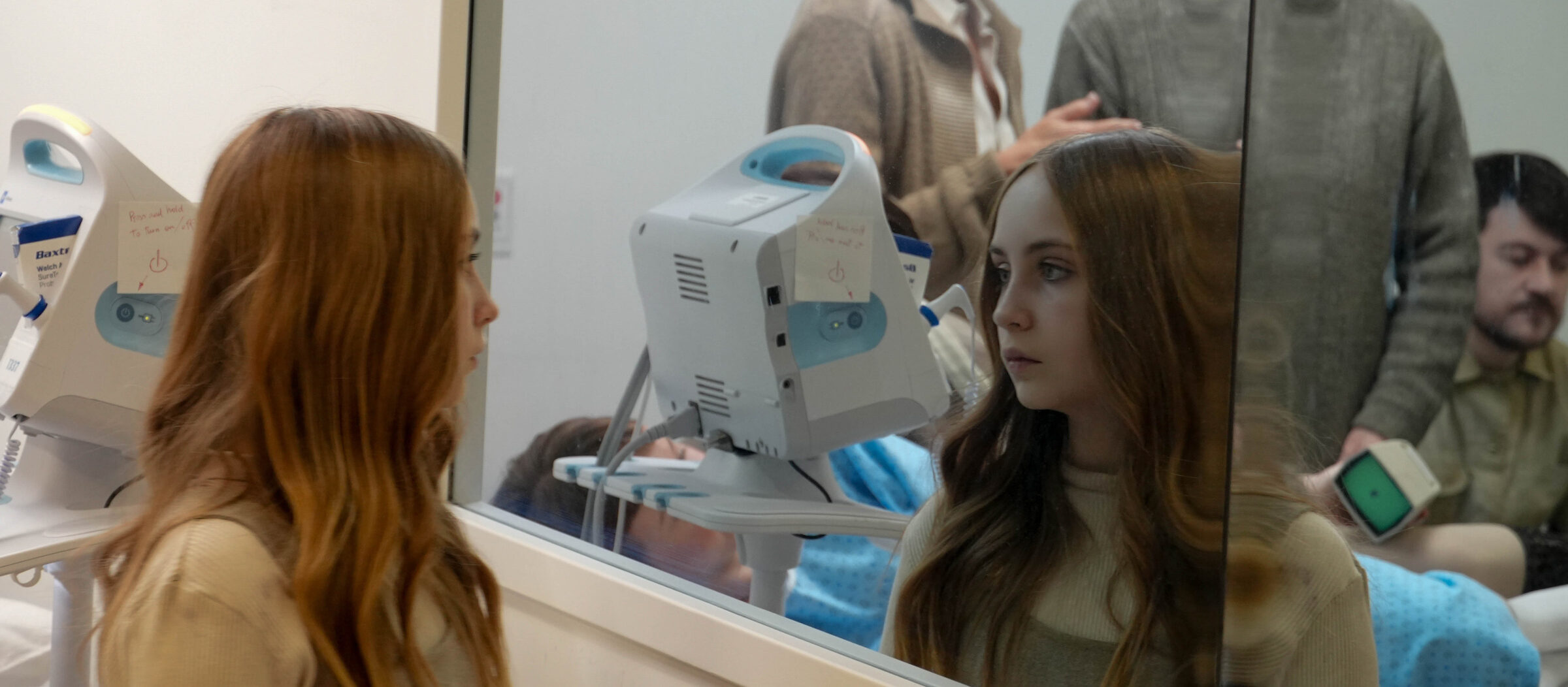
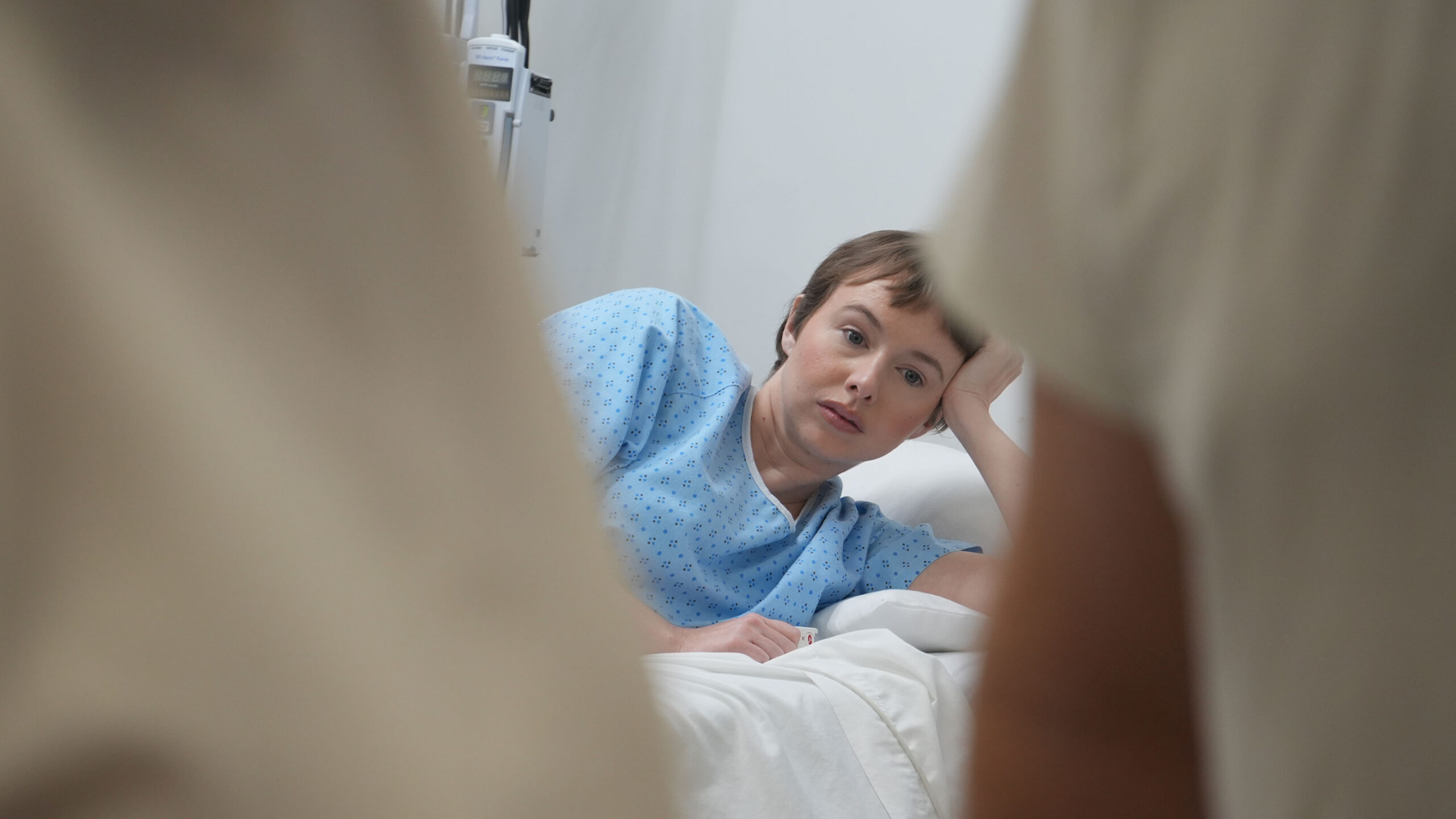
A young child actress studies her reflection in a handheld mirror while production continues around her. In the glass, faint reflections of other actors waiting nearby appear layered behind her, their presence softened by distance and time. Her expression remains steady and composed, as if quietly rehearsing or observing herself before the next take. The mirror creates a moment of separation within the busy set, framing both preparation and introspection in a single image. This photograph captures the pause between instruction and performance, where stillness becomes part of the process and character begins to form before the camera is ready.


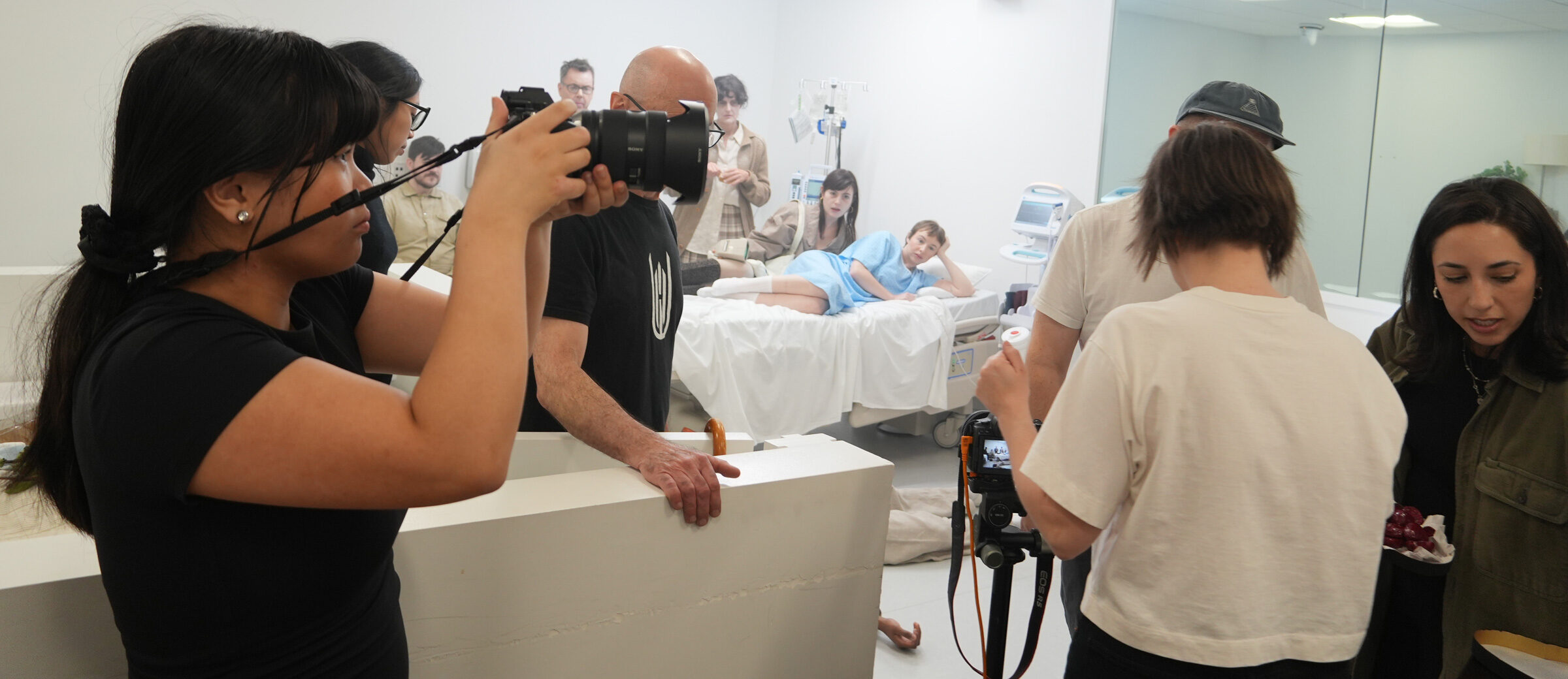
Coshie Bote, a second-year photography student and volunteer on the project, photographs the scene from behind the set as the shoot continues at Langara College in Vancouver. Positioned just outside the main action, she documents the behind-the-scenes moments while observing how lighting, staging, and collaboration come together in real time. This image reflects the educational aspect of the production, capturing a moment of learning where participation and observation merge, and where understanding the construction of a photoshoot becomes as important as the final image itself.


All seven actors remain in position as artificial fog slowly settles into the room, softening the fluorescent light and blurring the edges of the hospital set. While the technical team continues working off-frame, the actors quietly run through their lines, maintaining their marks and spacing as they wait for the next take. The scene feels suspended in time, shaped by coordination, repetition, and restraint. This image reflects the collective patience required during the production process, where stillness becomes part of the performance long before the camera begins recording.


Comments are closed.