
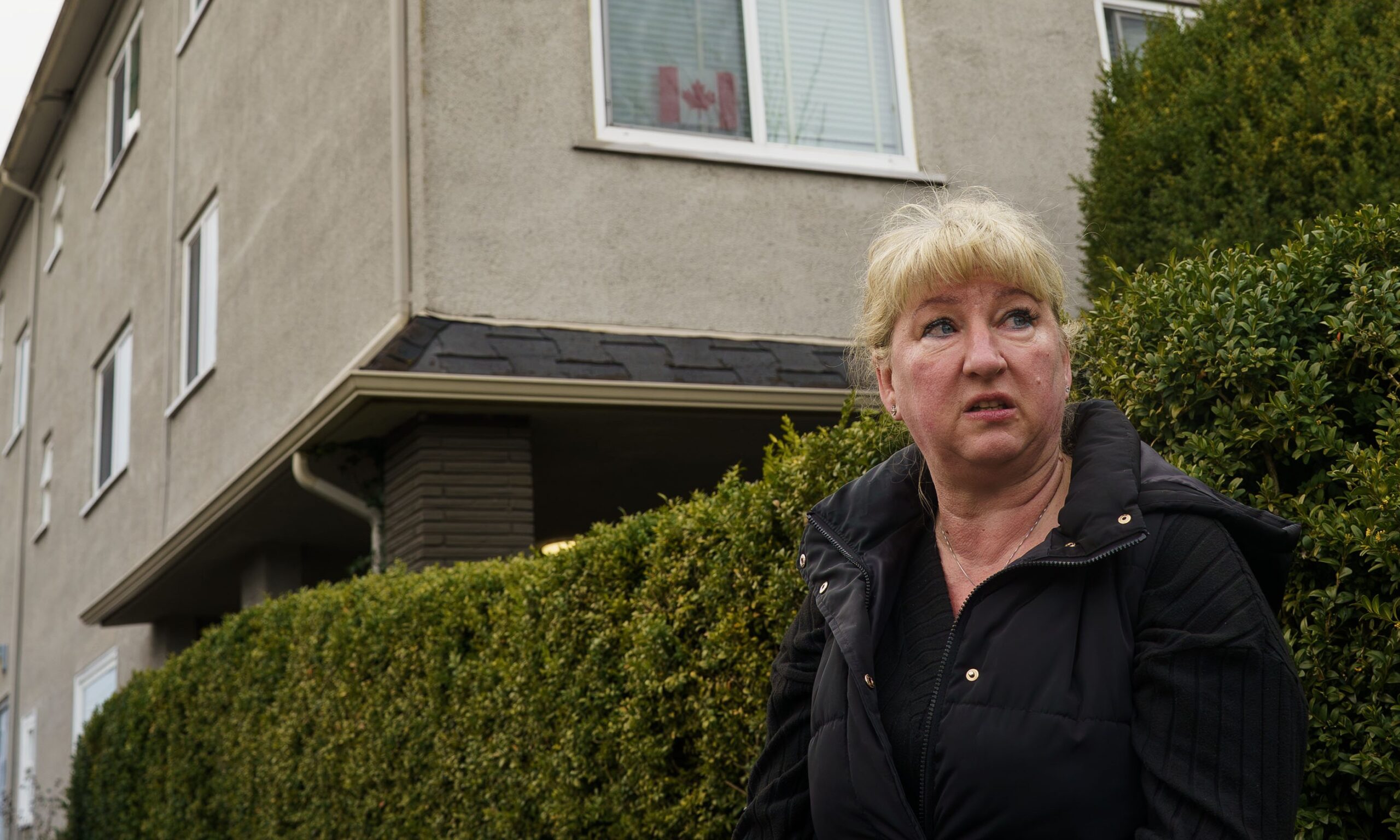
Seniors in Marpole stuck in “ovens” with few solutions
Older buildings in Marpole that retain heat, cause underlying risks for seniors in the neighbourhood
By LIAM ROBERT SCOTT
Seniors in Marpole’s aging stucco and concrete walk-up apartments face serious risks during this year’s expected record-breaking heat, say community advocates as they work toward solutions.
BC Hydro building data show the materials these are built with absorb heat during the day and radiate it overnight. There are many such buildings, often built in the 1960s, clustered in southern Marpole.
According to the City of Vancouver’s urban heat map, Marpole experiences some of the hottest street-level temperatures in the city due to a lack of tree canopy, raising concerns as Environment and Climate Change Canada forecasts 2026 will likely be among the hottest years on record.
Seniors are especially vulnerable during extreme heat because aging bodies are less able to regulate temperature.
At-risk resident
Maureen Jones, a senior who rents an apartment inside an old three-storey stucco building in southern Marpole, said temperatures inside her unit can climb well past 30 C during the summer months.
“I find that in the heat, if you don’t get sleep at nighttime, it affects you more during the day,” Jones said, adding it gets “very tiring.”
Although the city offers cooling centres, Jones said those in Marpole are mostly closed overnight.
A 2021 Vancouver equity report found Marpole has one of the city’s highest concentrations of low-income seniors.
Physical concerns for seniors
According to the Mayo Clinic, heatstroke is caused by the body overheating, usually due to exposure to high temperatures for too long, with the body temperature rising to 40 C or higher.
“We function best at a given temperature range,” said Michael Brauer, a professor in the school of population and public health at UBC. “Above that, our organs basically start to fail.”
Brauer said the body normally regulates temperature by circulating blood and sweating to release heat absorbed from the surrounding environment.
“As you get older, you’re less able to actually remove that heat from your body,” he said. “All of the systems just become slower.”
How to keep cool
It’s common to see seniors struggle with heat in older apartments, said Nilda Borrino, executive director of Marpole Neighbourhood House, a non-profit community hub.
She called the apartments “ovens.”
“We are concerned this year,” Borrino said, noting that the organization has started distributing cooling kits and holding workshops to teach seniors “how to cool in place.” Cooling kits include indoor thermometers, plastic footbaths, cooling towels, a spray bottle, cold packs and a reuseable water bottle.
Large-scale housing providers like Metro Vancouver — which supplies affordable rental homes to families, seniors and people with disabilities with low to moderate incomes — are trying to balance immediate outreach and retrofitting buildings with air conditioning units, said Jag Gill Klair, the district’s director of housing operations.
During extreme heat events, Klair said the district converts common areas into “cooling rooms” within buildings they manage.
She said the district is now prioritizing cooling in its long-term building renewal plans, but noted change doesn’t happen “at the drop of a hat.”
“Ten years ago, we weren’t considering adding cooling to any of our buildings,” Klair said. “I can tell you now . . . that is absolutely high on considerations.”
According to Extreme Heat and Human Mortality: A Review of Heat-Related Deaths in B.C. in Summer 2021 by the BC Coroners Service, the 2021 heat dome killed 117 people in Vancouver.
Broad cooling strategies often fail to account for the aging infrastructure of older buildings, and senior tenants are often reluctant to ask for upgrades from landlords, said Rachel Stern, a PhD candidate in geography at UBC whose research includes how heat affects senior tenants in Marpole.
“My main concern is that they’re in the same situation,” she said. “Not much has changed.”
VIDEO: Rachel Stern, UBC Geography and PhD Candidate, talks about growing concerns for older “walk-up” buildings
Comments are closed.