
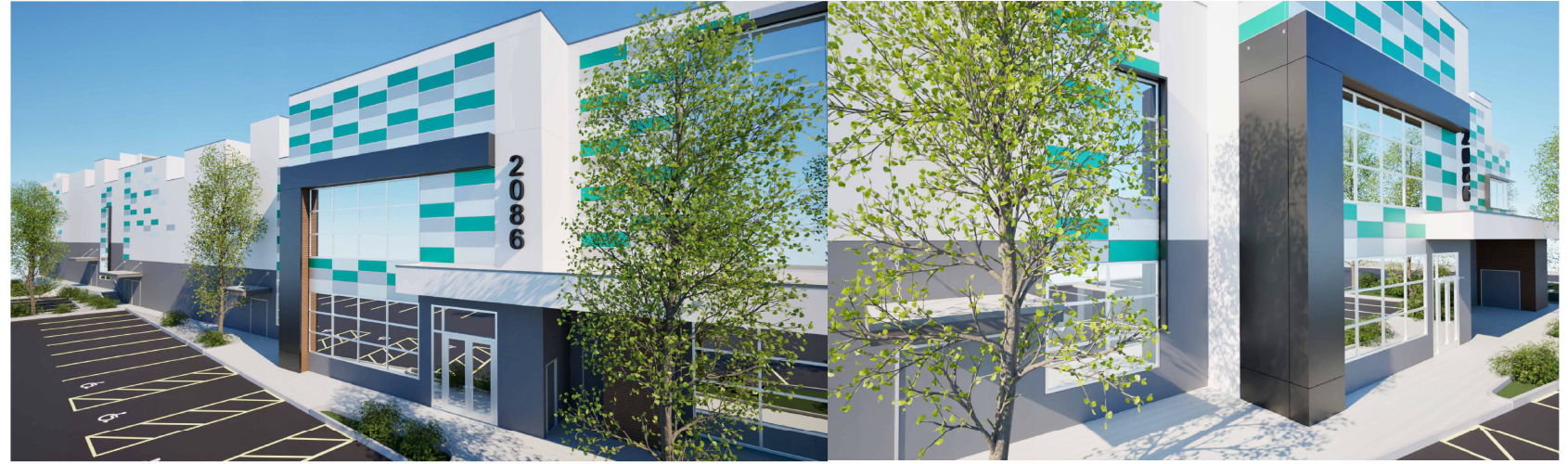
Proposed data centre in Nanaimo nears approval
The proposed project is moving closer to approval as concerns grow over water use and environmental impact.
BY PHILOMENA OKOLO
A proposed data centre in Nanaimo is moving closer to final approval despite a recent spike in opposition to the project from water advocacy groups and some residents.
City staff say the technical review of the development permit is complete and that the developer must now address outstanding conditions before the permit can be issued. If approved, construction would begin with site preparation and the first building enclosure.
Public concerns have largely focused on water use during summer droughts, noise impact from cooling equipment, and the development’s proximity to ecological areas near East Wellington Road. Coun. Sheryl Armstrong maintains that safeguards are in place and notes that industrial tax revenue could ease pressure on residential taxpayers.
On Oct. 20, the City of Nanaimo released a detailed statement responding to public questions about the data centre’s development on East Wellington Road. The city estimates the centre will use between 55,000 and 69,000 litres of water per day for cooling and domestic purposes. According to the city, this represents 0.19 per cent of Nanaimo’s total daily water use and about one per cent of industrial and commercial consumption. The statement compared the projected usage to other local facilities: a shopping mall uses about 100,000 litres per day, a local food processor uses 83,000 litres per day, and a car wash uses 44,000 litres daily. The city says the data centre will rely on water-efficient cooling technology and a closed-loop system to reduce loss, and that the site will be metered to track consumption.
The rezoning for 2086 and 2090 East Wellington Rd., from rural resource to high tech Industrial, was approved by the previous council. The first three readings took place in October 2022 before the current council was sworn in, and the fourth reading passed in April 2023 with a 6–3 vote.
Councillors Hilary Eastmure, Paul Manly, and Ben Geselbracht opposed the rezoning. Eastmure says she entered council too late in the process to fully question the proposal. “The project had already gone to a public hearing,” she said. “I still had questions and concerns, but I wasn’t allowed to ask more because of procedural rules. I voted against it.”
The data centre proposal, brought forward by Townsite Planning Inc. on behalf of 2779022 Ontario Inc., operating as Maplecolo, will not return to council for further approval. Under city bylaw, the development permit decision for the data centre is carried out by Nanaimo’s director of planning and development.
Some councillors said they supported the rezoning because of economic and security advantages. Armstrong says she voted in favour because of the construction and operational jobs the project could bring, and because of the importance of securing Canadian data within Canada.
“It’ll bring jobs during construction and after,” Armstrong said. “It’s in an industrial area, not near many residences. And as a former police officer, I want Canadian data stored in Canada where it’s protected by Canadian law.”
Armstrong says water usage did not raise concerns for her. “This will only use 0.19 per cent of our water. Our city has an excellent, robust water system, more so than most places,” she said. “If staff thought it was too much water, they’d recommend against the development permit.”
She said that seasonal water restrictions exist to encourage conservation, adding, “If we say no to this, then why not say no to a new apartment building too? It’s about balance.”
City staff have also responded to claims circulating online regarding groundwater and aquifer depletion. Jeremy Holm, director of development approvals, says those concerns do not apply to this project.
“This data centre won’t use groundwater. It’s tied into the city’s system, which is not groundwater-based,” he said.
Holm said that Nanaimo has decades of universal water metering, tiered pricing, and conservation measures that keep system-wide consumption stable despite population growth. He said that ecological assessments for the site identified sensitive ecosystems, resulting in requirements for wetland protection and a 20 per cent tree retention area.
Despite these assurances, opposition has grown since a CBC News report highlighted the water intensity of data centres, especially those supporting AI technologies. Last month, representatives from the Vancouver Island Water Watch Coalition appeared before council urging the city to halt the project.
During the Nov. 3 council meeting coalition chair, June Ross questioned whether the city’s confidence is justified. “Do you seriously think there is enough water here to support a centre this size?” she asked. Ross pointed to four consecutive years of drought, reports of wells running dry near other data centres, and Gabriola Island’s dependence on Nanaimo’s water supply. She also questioned whether prioritizing an industrial development aligns with the city’s stated goals around climate resilience. “Do you realise how ridiculous this seems?” she said.
As global scrutiny of data centre water consumption increases, Nanaimo’s proposal will be a litmus test of how a rapidly growing city, prioritizing conservation efforts, balances economic development with environmental stewardship.
Comments are closed.