
Kwikwetlem First Nation seeks to bring back sockeye and coho
Ancestral veneration for salmon inspired hatchery project
By JUAN DIAZ LOPEZ
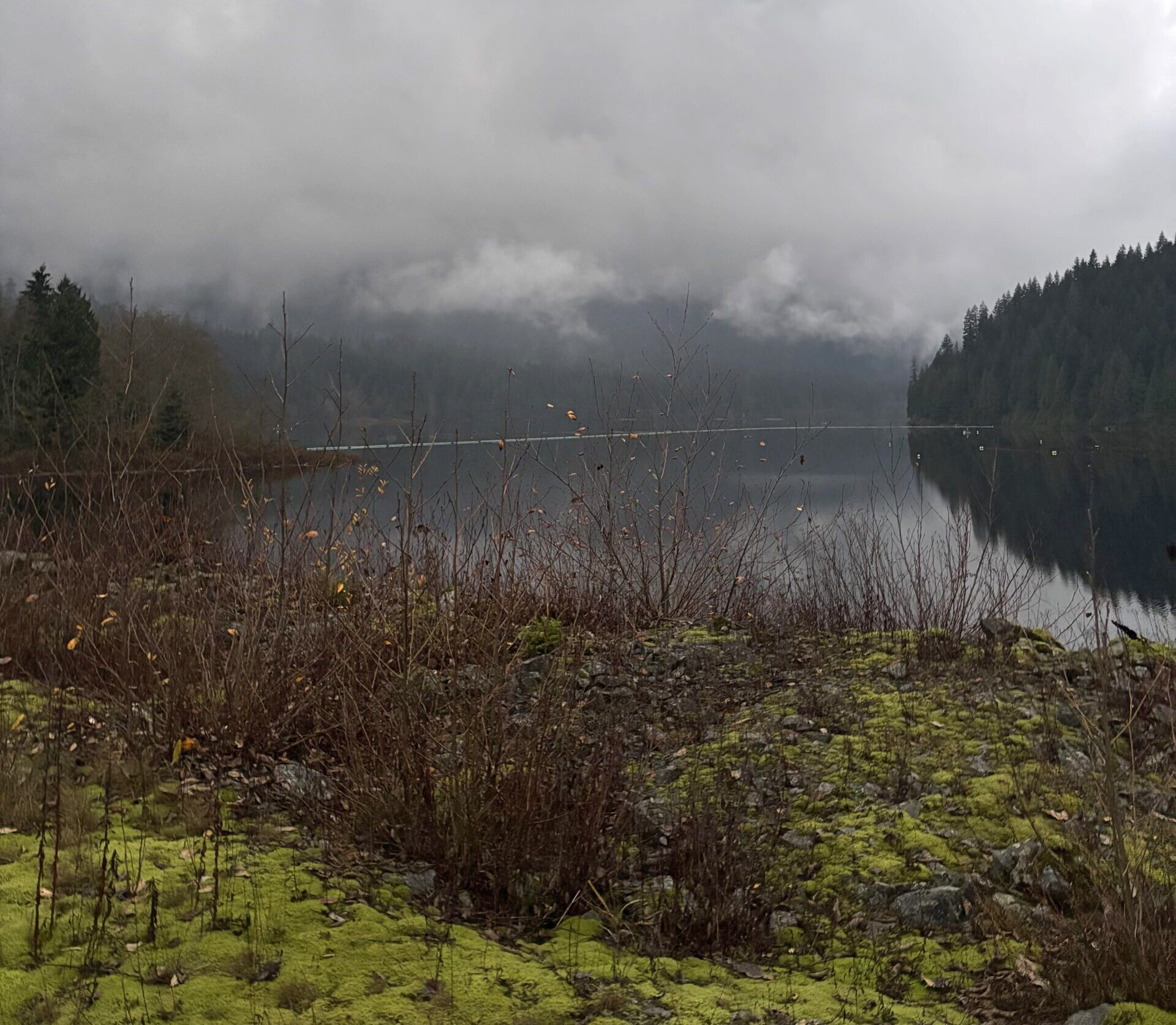
A continued hatchery project by the Kwikwetlem First Nation hopes to undo damage from the Coquitlam Dam to salmon populations in their traditional territory.
This hatchery, started in 2022, located next to the Coquitlam Dam, is considered by the nation to be a historic step towards restoring back the salmon to their ancestral lands. Salmon had flourished in the nation’s territory, but since 1913 when the dam was opened, the species vanished.
Kwikwetlem territory centres on the watershed of the upper and lower side of the Coquitlam River, and over to the east side of Pitt Lake. In the west side the territory includes Mossum Creek and Port Moody Inlet over to Stoney Creek, the lands of Sapperton Heights, and the north side of the Fraser River.
“The whole thing is gated, and the whole entire thing is drinking water. So it belongs to Metro Vancouver,” said George Chaffee, chief and councillor Kwikwetlem First Nation.
Over 30 years there has been a fight with the federal government to restore the Indigenous rights in their territory, including a request to not dam the Coquitlam River. The nation shares its name with the fish.
“The word Coquitlam means red fish of the river,” said John Peters, chief and councillor of the Kwikwetlem First Nation.
Metro Vancouver, which controls the watershed, announced in 2022 it would help the Indigenous community to reconnect with their land, offering sources to develop and operate the hatchery.
Rodney Lee, project coordinator of fisheries and hatcheries from the Kwikwetlem First Nation said, “We’re looking for is for BC Hydro to be able to make an investment to improve fish passage.”
The hatchery, funded for 10 years, was completed in Nov. 2024 with a project cost of $2 million. It aims to incubate 30,000 eggs annually and raise 15,000 fish to release. The Department of Fisheries and Oceans provides technical support, biologists and veterinarians.
Since the hatchery started being operated by the nation, there has been a release of around 9,000 eggs from last summer, however, it is still below the annual target. Eventually, they still have the hope of the sockeye returning to the lake to spawn.
“Put them in the river and wait for four years to see if they would act like the same sockeye from a hundred years ago,” Chaffee said.
The nation hopes to prove it can restore salmon habitat even under Metro Vancouver’s full control of the watershed.
“We proved that two species definitely can spawn inside that lake… But if you look at the whole picture, instead of taking the fire hose, we got to take it one step at a time,” Chaffee said.
The Voice reached out to BC Hydro but had not received a response by publication.
Comments are closed.