
Environmentalist and artist groups pulling from the same pool of funds
Stewardship group says they need new funding to survive
By AJ WATT
Native-plant advocates say that Vancouver city council needs to create a new form of grant for environmental non-profit organizations who keep invasive-plant species from spreading in community greenspaces.
Currently, grants like the BC Arts Council Grants or the Theatre Rental Grant Program are meant for arts organization, not for environmental stewardship groups like Free the Fern.
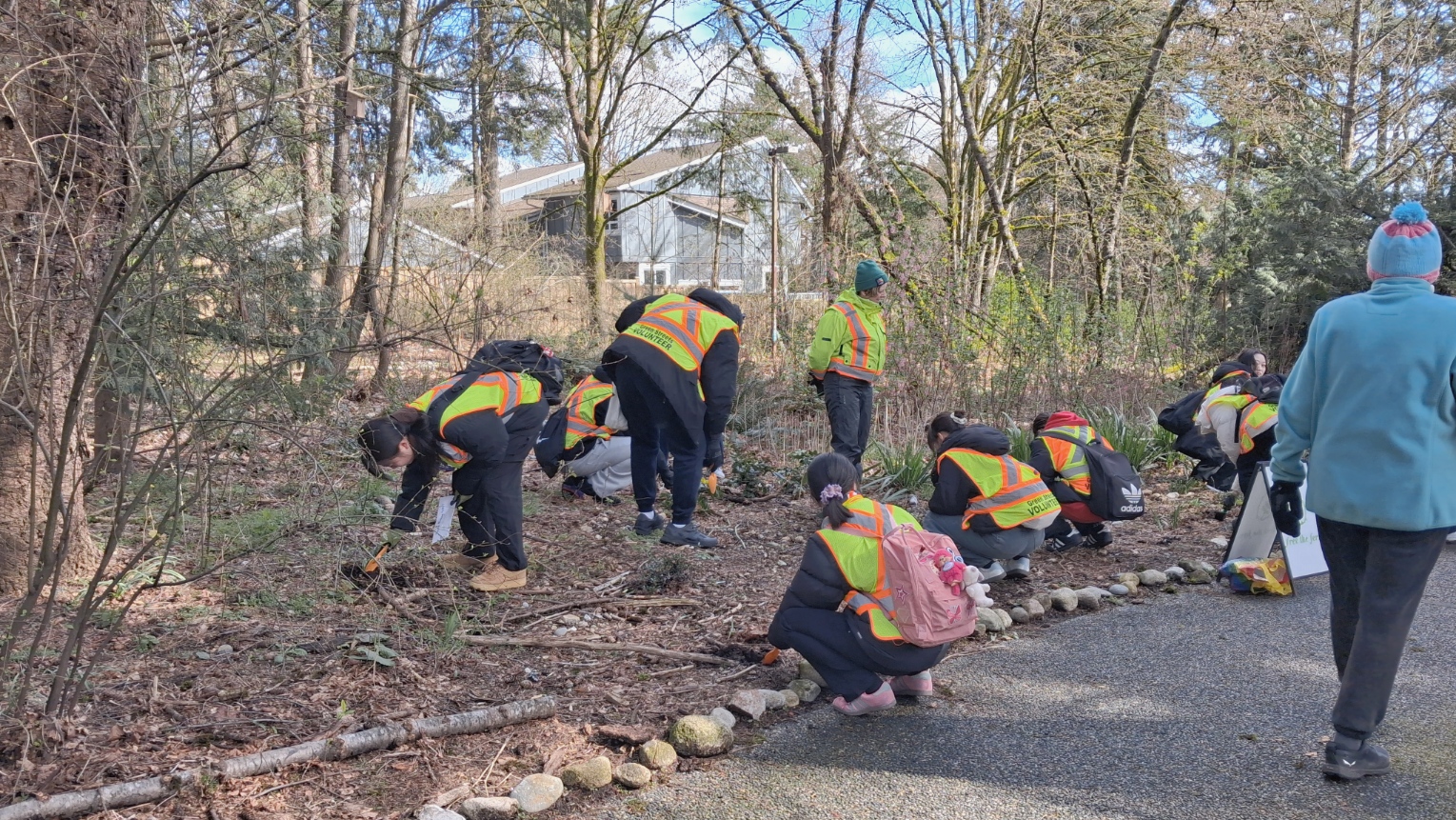
In 2021, a group of volunteers banded together to form Free the Fern, to clear invasive species of plants that were choking out trees in the Champlain Heights trail system, one of the last native forests in Vancouver. Removing invasive species like English ivy from the 45-hectare trail system located in the Killarney area, their work made the city redesignate the area from a “hazard status” to an “ecological corridor.”
No to new funding
On March 4, the city declined Free the Fern’s initial ask for $30,000 of core operational funding to coordinate volunteers maintaining the park, founder Grace Nombrado said, because there were other applications that rank higher on the list of city priorities. Nombrado said the non-profit needs the funds to cover one part-time staff member, to run all of their events, and to buy tools, gloves, and plants.
“That was our ask from the city,” she said.
She said the community climate action grant that Free the Fern applied for is only for climate change initiatives, and according to the city that meant their stewardship work wasn’t “directly related to climate change.”
Nombrado said that Free the Fern has just enough funds to make it to the end of planting season, which is in October.
Without city funding, the Champlain Heights could revert back to hazard status. Nombrado said that she will continue to advocate for the area but is limited in what she can do as a citizen.
On March 10, Vancouver city councillor, Pete Fry made an amended request for core funding for the non-profit to try and make sure stewardship work could continue but that was also declined by the city.
“Those grants are a sort of finite pool of money,” Fry said. “There’s no easy answer, unfortunately.”
The Voice reached out to the city community climate action department for comment but did not receive a response by publication deadline.
“We wouldn’t even need a Free the Fern if the city was to steward the area,” said Nombrado. She said that because the city has never funded their efforts that they’ve had to apply for grants outside of Vancouver.
“If it’s city land, it should be funded by the city,” she said. “The irony is the biggest thing. They have donated things like gloves and topsoil but have not funded us.”
City council’s limited help
Fry said that he has had discussions with a few different non-profit groups to come up with a new form of grants for stewardship in the city.
“We used to have dedicated granting streams focused on green city initiatives and that is something I’m interested in exploring,” he said.
Champlain Heights is a “bit of an anomaly” with over 50 per cent tree canopy cover, according to Allison Luke, a master of urban forest leadership from UBC, and a red seal landscape horticulturist, which is a professional who surveys and assesses landscapes.
“There’s only four per cent of Vancouver’s native forest remaining,” said Luke, who authored the article titled, Growing Together: How the Champlain Heights Trail System Benefits the Local Community and Environment in Vancouver.
Resident’s reactions
According to a tree inventory and species analysis Luke conducted, there are 590 trees on the Champlain Heights trail system, and 45 native and ornamental species.
Nombrado said that they’ll keep advocating and protect what’s left of the trail system.
Champlain Heights resident Kim Halladay said she has been walking the trails there for the past 30 years and really appreciates the clean-up efforts from her neighbours.
“It’s really nice because everything’s cleaned up now were as it used to be a little bit overgrown,” said Halladay.
Comments are closed.