
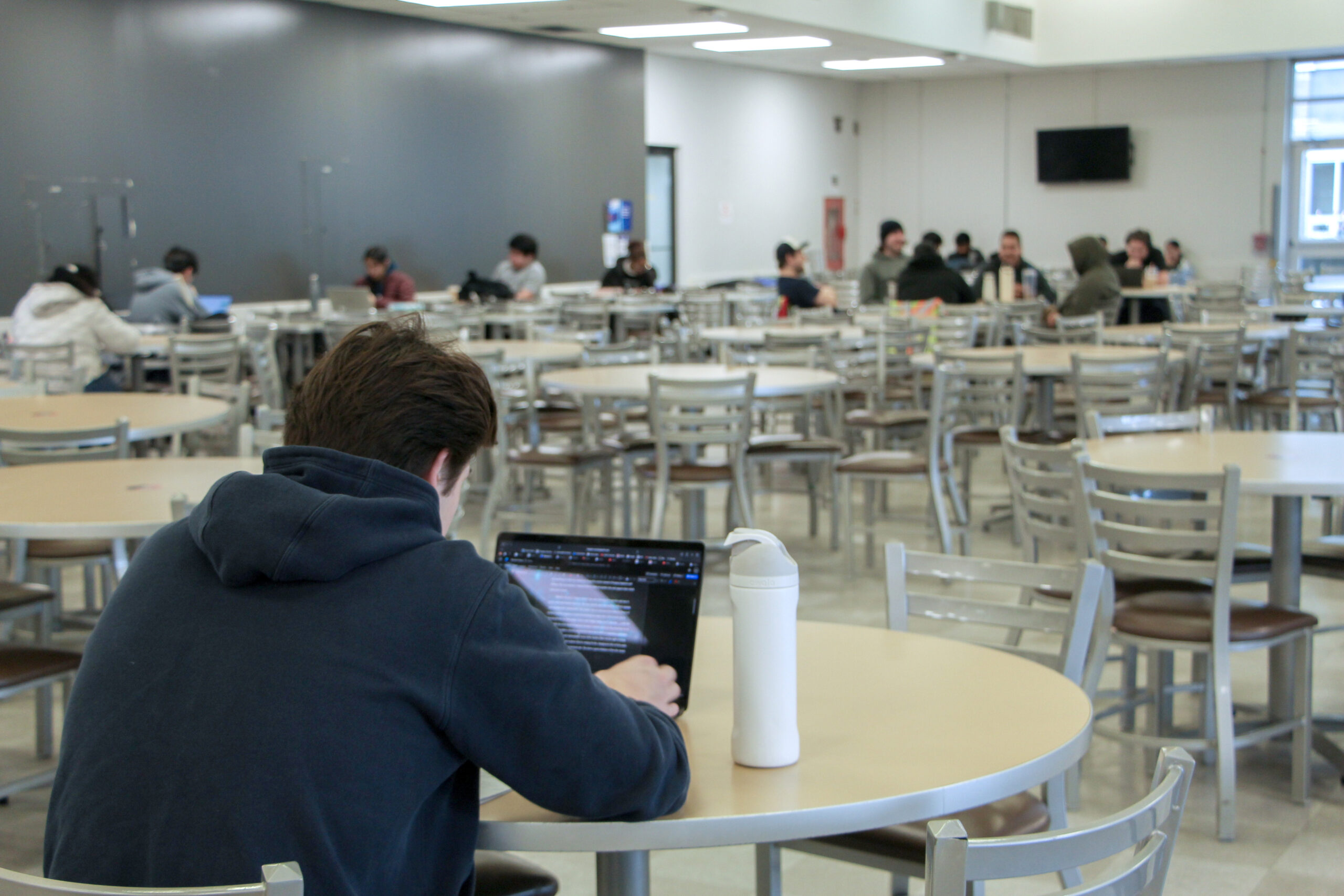
Loneliness Among Students Remains Prevalent Four Years After Post-Secondary Reopening
Lockdown restrictions have been lifted for years now, but students still feel the impact of isolation on campuses today
By DANIEL BUMANGLAG
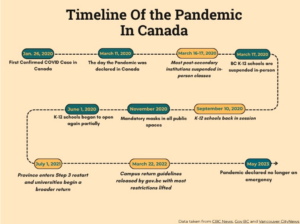
More than six years have passed since the inception of the pandemic, which flung many young
people into social isolation for almost two years. It was expected that everything would return
to normal once schools and universities re-opened. However, even now, loneliness among
post-secondary students remains prevalent.
Despite experiencing the pandemic in high school, Sanaa Mathew, a third-year student at UBC,
says that the psychological implications of the lockdowns still affect her to this day.
“I think it was already starting to shift for me as I wasn’t all that social starting off. And then the
pandemic hit and then I became way less social than before,” Mathew said.
“Usually in high school you would grow those skills, but there was that two-year gap where I
didn’t get to grow them.”
Amelia Preston, a third-year SFU student who struggles with social anxiety, says the pandemic
exacerbated her condition.
“COVID-19 kind of affected the way I handled friendships because I went from not wanting to
spend time by myself ever to being really OK with spending time by myself,” said Preston.
As the new academic year kicks off, students fresh out of high school face a demanding
transition: navigating sprawling college campuses where the pressure to fit in can quickly lead
to social anxiety and burnout.
According to a 2024 Statistics Canada report, 61 per cent of youth aged 15 to 24 experience
loneliness nationwide. A national snapshot from the Campus Wellbeing Survey recorded 53 per
cent of post-secondary students reporting feelings of loneliness.
The challenges of the lockdown were detrimental to a key turning point in cognitive growth,
especially for adolescents, according to the World Health Organization.
“Adolescence is a crucial period for developing social and emotional habits important for mental
well-being,” reported a WHO article from 2025.
Jennifer Broughton, the director of operations at GenWell, a Canadian non-profit aimed at
combatting loneliness by advocating for social connection, highlights the consequences of social
isolation.
“Being around people every day, navigating friendships, figuring out who you are in relation to
others: when that was disrupted, it wasn’t just missed moments. It was missed practice,” said
Broughton.
Broughton said students coming into post-secondary are expected to independently build
connections, but never had the opportunity to develop the necessary social skills.
A 2023 study, conducted by the Netherlands University of Groningen examining adolescent
loneliness during the pandemic, found that those who were already struggling with poor social
skills and less social support from peers may “have used more avoidant coping strategies and
withdrawn socially.” This may have left many students unwilling to make new friends or unable
to upkeep their current friendships upon returning back to school.
Kristina Castaneto, a PhD graduate from SFU’s social psychology program, shared how difficult it
is for new students to form new social circles after a disrupted high school experience.
Castaneto says that when an attempt to socialize doesn’t go right, people tend to give up not
too easily.
“We have a bit of a heightened sense of rejection,” said Castaneto.
A 2024 study conducted by the University of Glasgow in Scotland describes the transition into
post-secondary as a significant change that marks a period of independence, where students
shift their primary social support group to university peers. However, in Vancouver, it is common
for domestic students to fall back on high school cliques for social support rather than in
post-secondary. Justin Setiawan, a second-year international student at UBC, said making
friends is difficult with domestic students.
“In my first year, most of the people, especially the local people I’ve met were a bit rude,” said
Setiawan. “They don’t really want to make new friends because a lot of them have friends from
high school.”
A 2024 study measuring social-emotional skills in post-secondary students before and after the
pandemic found students now have more difficulty regulating their emotions and are more
self-conscious. Connection can feel risky, driving anxiety, withdrawal and loneliness.
Preston said it’s easy to exchange contact information as classmates, but building the
relationship outside of classes relies heavily on someone taking the initiative.
“You kind of have to take these initiatives not wait for people to come to you instead. But I think
everyone’s kind of waiting for that so people don’t go out of their way to make plans,” Preston
said.
However, social anxiety makes taking that first step difficult.
“I get anxious because what if we chatted fine in class but when we meet up it’s super
awkward,” Preston said.
This leaves many students in a limbo where they are unable to fall back onto old friends but
struggle to make new ones.
New Zealand’s Auckland University of Technology conducted a series of student interviews that
explored the formation and sustainability of post-secondary relationships, and most participants
reported that the larger issue is finding long-term friendships. Despite taking the same classes,
many find academic settings lacking in emotional enrichment. Even outside of classes, many
students have other priorities.
Kiffer Card, an SFU expert on social connection and loneliness, said in a statement for the Voice
that students have many obligations that end up taking priority over socializing: keeping up with
their classes, working a job.
“The problem with loneliness in college students isn’t because there is a lack of opportunity for
social interaction. Rather, it’s the challenge of living in a society not well designed for our
psychological and social needs,” said Card.
The Canadian Alliance of Student Associations released a report detailing the socio-economic
factors that students face today. Since 2023, the average rent has gone up by 22 per cent and
living expenses, including groceries, jumped by 72 per cent. One in every three students
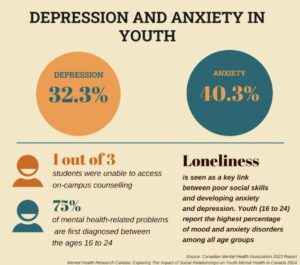
reported negative mental health experiences. Studies show loneliness as a mediator towards
anxiety and depression, the two most common mental disorders in Canada. Mental health
support for students on campuses still encounters issues with accessibility. One out of three
students are unable to access on-campus counselling.
Students with good mental health are more open to new experiences, said Castaneto. “You’re
broadening your mindset when you’re in a positive mood.”
Loneliness is more than just an individual problem but a societal issue, according to Broughton.
“We need to start treating social health like we treat physical health. Something we invest in,
something we design for, and something we all have a role in supporting. That means rethinking
our schools, our workplaces, and our communities to create more opportunities for meaningful
connection. It also means helping people understand the ‘why’ behind connection, so they’re
more intentional about it in their own lives.”
(With files from Rhea Singh)
VIDEO: Social Psychologist offers advice for post-pandemic socializing