
Innovative housing project lets West Van workers stay local
Kiwanis North Shore Housing Society’s new development on Gordon Avenue helps municipal workers live in their community.
BY EHRIN LOPEZ
After years of commuting from neighbouring cities to West Vancouver because of high housing prices, many municipal workers are living in the community they serve thanks to an innovative housing project.
Driving instructor Neda heard about the housing opportunity through her daughter, Avin.
Avin knew right away it was perfect for her family when she found a pamphlet at her after-school care. “It was like the houses were just for us,” Avin said.
The pair were overjoyed and said it’s the best home they’ve had in a while.
Approved in 2018, West Vancouver’s Kiwanis housing project on Gordon Avenue has now opened, providing 156 below-market rental units for residents who earn between $106,000 and $161,000. The apartments give priority to municipal workers in the hope of addressing the need for affordable housing for people who work in the community.
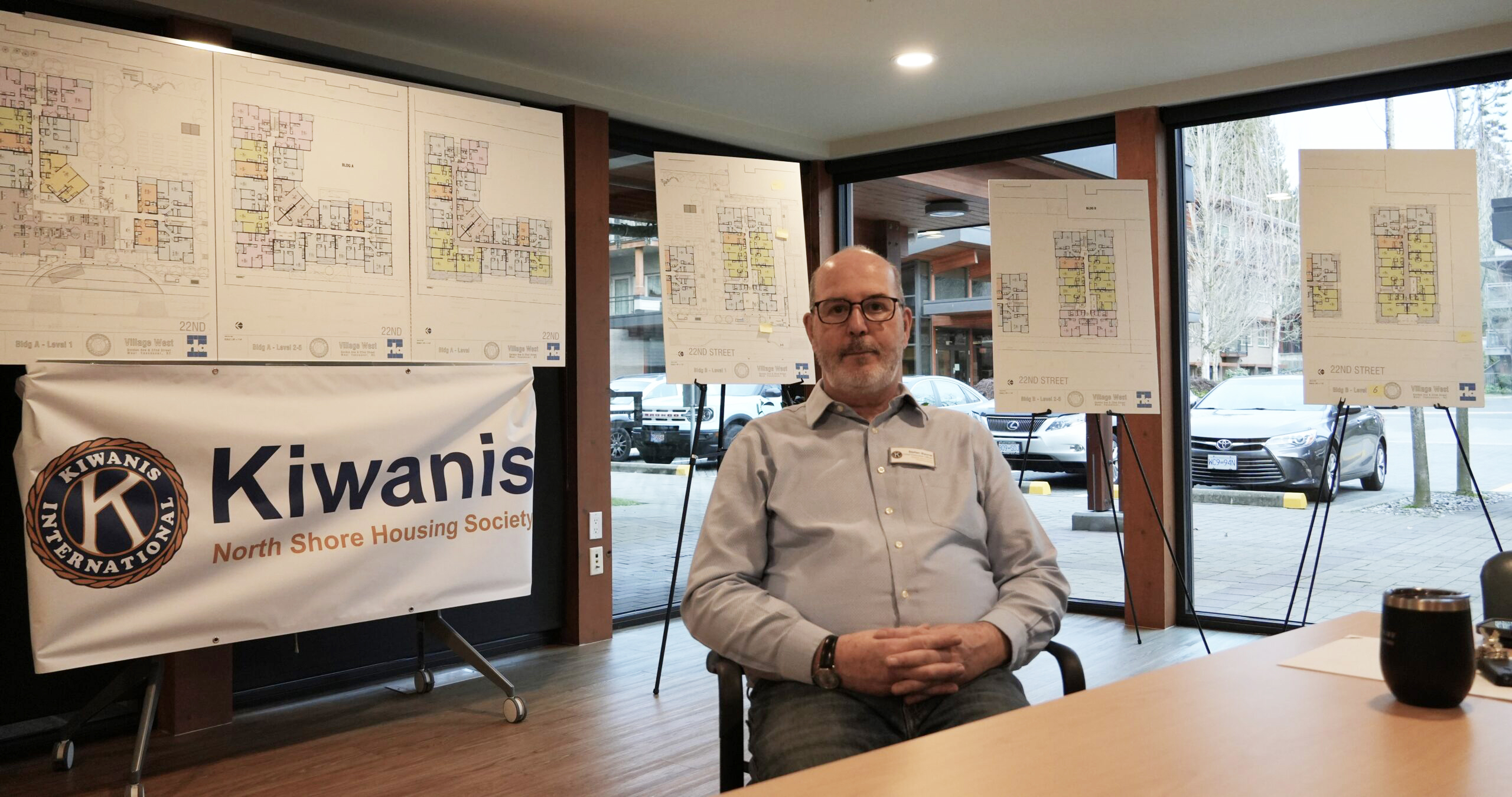
Stefan Baune, CEO of the Kiwanis North Shore Housing Society, says the apartments received roughly 500 applications for 156 units and filled up within the first few months.
With such high demand, Baune said Kiwanis used a “chronological system” for first responders and selected groups to get early access to apply, followed by a first-come, first-served system.
Baune says the reason West Vancouver hasn’t seen a project this accommodating on such a scale is because of public opposition.
“People envision people with mental health issues, screaming and acting strange, looking funny. But if you take 10 minutes and stand in front of the building and observe who’s going in and out, these are normal people… people you will see standing next to you at the post office,” Baune said.
Stephen Price, a teacher and an advocate with the West Vancouver Teachers’ Association, says some educators who helped push for the Kiwanis housing project in 2018 aren’t able to live there.
Price said one teacher who supported the project couldn’t move in because income limits would force her out after her mother, who receives a disability pension, dies. He noted the limits also exclude teachers at the top of the pay scale, showing that below-market rentals lack stability.
“Because of that, a number of teachers who were very keen to see it come in, decided not to do it,” said Price.
Mary-Ann Booth, the former mayor of West Vancouver who was in office at the time of approval in 2018, emphasized the need for inclusive options. From shelters to luxury homes, housing is no longer affordable, causing spillover.
“The condo people start renting, the renting people start renting at the lower end, and the bottom end gets kicked off into the streets,” Booth said.
“I wasn’t prepared as mayor to just do nothing,” she added.
She wanted to make sure Kiwanis’ site would be used for affordable rentals for municipal workers.
Michael Geller, a housing expert and fellow of the Canadian Institute of Planners, said West Vancouver is in a “disaster sandwich” if an earthquake were to hit, noting the challenges firefighters and other authorities from outside the district would face reaching emergency areas.
Geller noted the land originally belonged to Vancouver Coastal Health, which no longer needed it. West Vancouver bought the property and divided it into two parts, leasing one to a private developer for a market condo project and the other to Kiwanis.
Money from the private developer helped cover the district’s costs, allowing Kiwanis to lease its portion for one dollar per year.
“You could say West Vancouver was acting a little bit like Robin Hood,” Geller said.
Comments are closed.